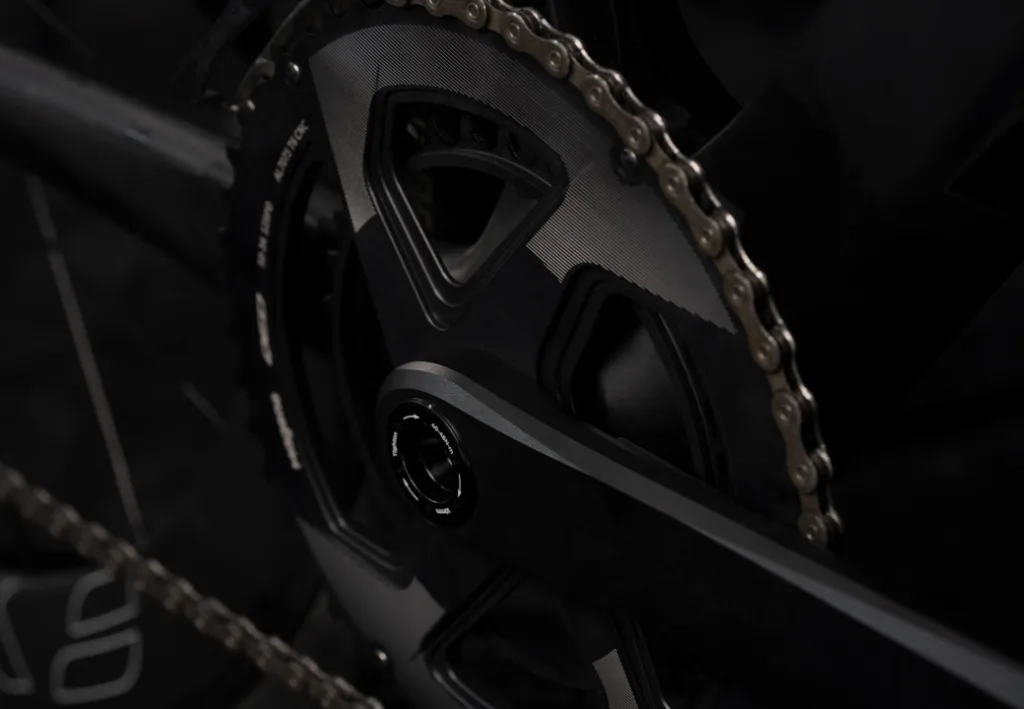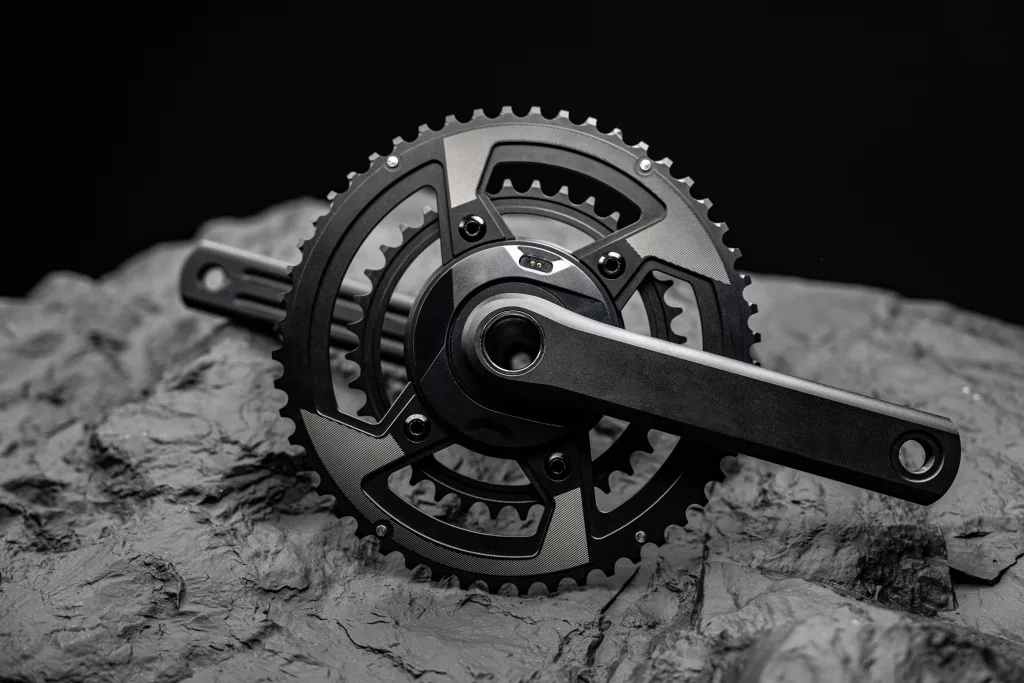

A bike power meter can increase the value of a bicycle model by improving its specification, rider experience and market position. The benefit is greatest when the power meter is designed into the complete bike rather than added as an accessory after production.
For bicycle brands, the key question is whether factory integration creates clear customer value without causing compatibility, production or warranty problems.
Why a power meter adds value
A cycling power meter measures the rider’s output in watts. Unlike speed, power is not directly affected by wind or gradient. Unlike heart rate, it responds immediately when the rider changes effort.
This gives cyclists a consistent way to manage training intensity, pace long efforts and track progress. Cycling Weekly identifies real-time pacing and fitness tracking as major benefits.
For a bicycle brand, these rider benefits create several commercial opportunities.
1. Make performance easier to understand
Frame stiffness, carbon layup and aerodynamic improvements can be difficult to explain in a showroom. A power meter offers a simpler message: the bike measures the rider’s performance from the first ride.
It gives dealers and product pages clear benefits to communicate:
- real-time power measurement;
- structured outdoor training;
- controlled pacing;
- comparable indoor and outdoor data;
- measurable performance progress.
A power meter does not make a rider faster by itself. It provides better information for training and pacing decisions. This is a more accurate and credible sales message.
2. Create clearer bike model levels
Power meters can separate bike models that use the same frame platform.
| Bike Model | Power Meter Strategy | Product Role |
|---|---|---|
| Entry Performance | Power-ready crank interface | Supports later upgrades |
| Upper Mid-Range | Factory-installed power meter | Adds visible value without changing the frame |
| Flagship | Integrated spider power meter | Reinforces race-ready positioning |
| Team or Custom Build | Configurable ODM power meter | Supports rider- or market-specific builds |
This structure avoids adding the same cost to every model. It also gives customers a clear reason to choose a higher specification.
Power meters have begun appearing on performance-oriented complete bikes, and consumer expectations are shifting accordingly. A 2026 Cycling Weekly review of the Scott Addict RC Pro described the absence of a power meter as disappointing because lower-positioned SRAM builds included one as standard.
3. Reduce aftermarket upgrade problems
Installing a power meter after purchase requires the rider to check crank length, spindle size, chainring interface, bottom bracket and frame clearance.
Factory integration, however, shifts these responsibilities to the bicycle manufacturer. The brand only needs to verify:
- crank and frame clearance;
- chainline and Q-factor;
- BCD and chainring compatibility;
- assembly torque;
- ANT+ and Bluetooth connections;
- calibration before shipment.
The customer receives a complete system instead of solving a compatibility problem. Dealers also spend less time selecting and installing aftermarket products.
Technical buyers can use Magene Enterprise’s power meter and OEM support FAQ to review compatibility, accuracy and production support.

4. Connect the bike to a digital ecosystem
A connected power meter works with bike computers, training platforms and indoor cycling applications. This turns the complete bike into part of a wider digital training system.
Bicycle brands should confirm support for common devices and applications. They should also define who manages firmware updates, pairing problems and technical support.
Power meters can form part of broader smart cycling solutions that include bike computers, electronic shifting systems, sensors and smart lights. This allows brands to create complete product packages instead of combining unrelated accessories.
Magene Enterprise provides smart cycling solutions, including ODM services for power meters, sensors, and lights, as well as OBM services for electronic shifting systems, helping bicycle brands build a comprehensive smart product ecosystem.

5. Lower product development barriers
Developing a power meter requires strain-gauge technology, mechanical analysis, electronics, algorithms, calibration equipment and environmental testing.
Working with an experienced bike power meter manufacturer allows a brand to start from a proven platform. Cooperation may include:
- adapting a power meter crankset;
- developing an ODM spider power meter;
- integrating the sensor into a custom crank;
- customizing firmware, graphics or packaging.
The right model depends on production volume, required differentiation and design ownership.
Integration quality protects commercial value
A power meter adds value only when it works reliably as part of the complete bike. Poor compatibility or unclear warranty responsibility can turn a premium feature into a support cost.
Before entering into an ODM partnership for a power meter, brands should evaluate accuracy, temperature compensation, waterproofing, battery life, drivetrain compatibility, production calibration, firmware support and product traceability.
Warranty ownership and replacement availability should also be defined. The power meter may need support for several years after the bicycle enters the market.
Magene Enterprise supports bicycle brands throughout the project lifecycle. The process starts with requirement definition and product selection. The team then evaluates mechanical compatibility, customization needs and testing requirements. Product samples allow the brand to verify the solution before mass production.
Before production begins, Magene provides installation and commissioning guidance. The team can also train production-line staff and help optimize standard operating procedures. This supports consistent assembly and reduces integration problems.
Support continues after the bike enters the market. Magene coordinates technical communication and investigates reported quality issues. Eligible cases can be handled through repair or replacement under the applicable warranty terms. This gives brands a clear process for managing product performance after delivery.
From an added component to a stronger bike model
A power meter can strengthen performance positioning, create clearer model levels and reduce aftermarket upgrade friction. It also connects the bicycle with a wider training ecosystem.
The best results come from matching the technology to the target rider and validating it as part of the complete bike.
Magene Enterprise provides ODM options for spider power meters and power meter cranksets.
Brands can request power meter samples or contact Magene Enterprise to discuss compatibility, customization and factory integration.