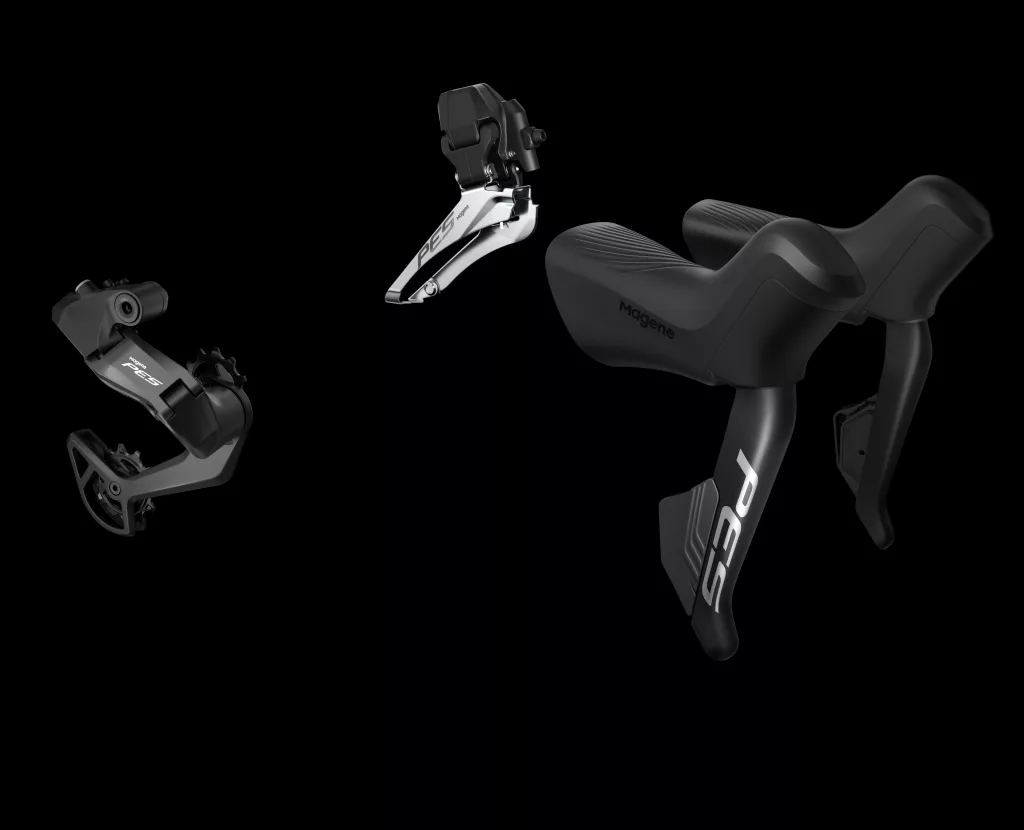
Power meters used to sit mostly on race bikes and serious training builds. That has changed. More riders now expect power data on performance road bikes, gravel bikes, and higher-value complete-bike builds. For bicycle brands, this creates a useful opportunity, but also a more technical question: which power meter architecture should the bike platform use?
Two common options are spider power meters and crank power meters. They both measure rider output through the drivetrain, but they do it from different positions. That difference affects accuracy expectations, compatibility, assembly, service, and how easy the system is to scale across a product range.
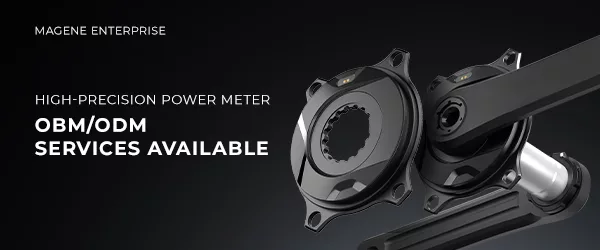
At Magene Enterprise, we work with bicycle brands, eBike manufacturers, and OBM/ODM partners on production-ready cycling technologies. In power meter projects, our focus is spider-based power meter solutions, factory integration, brand customization, and Power Meter Ready bike configurations.
This article compares spider power meters and crank power meters from a practical product-development perspective. It is written for teams that need to spec complete bikes, not just individual riders shopping for an upgrade.
What Is A Spider Power Meter?
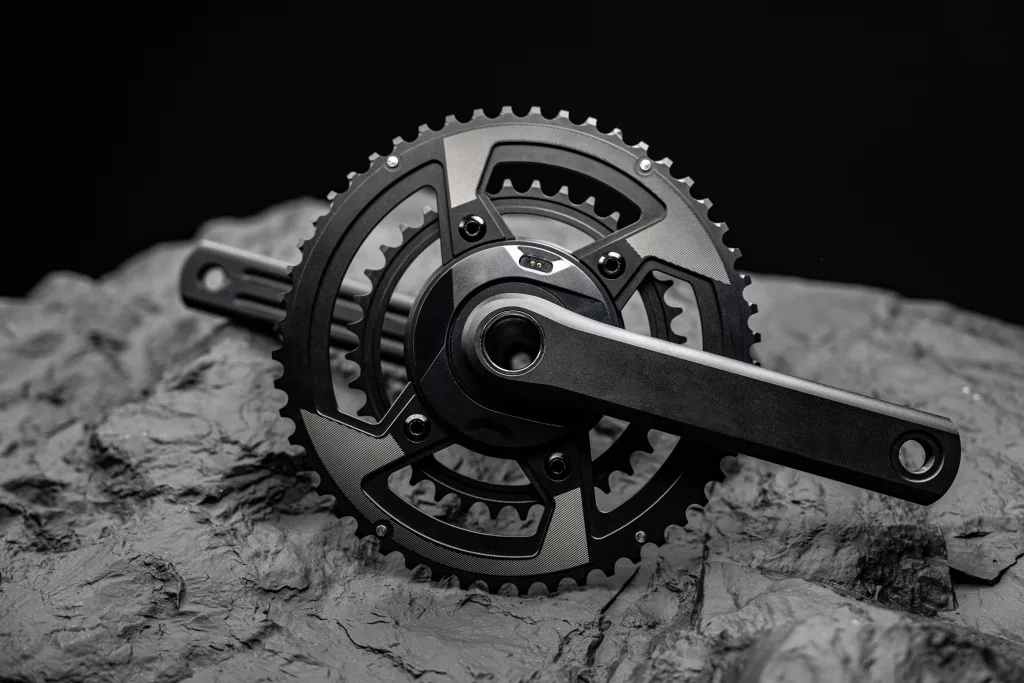
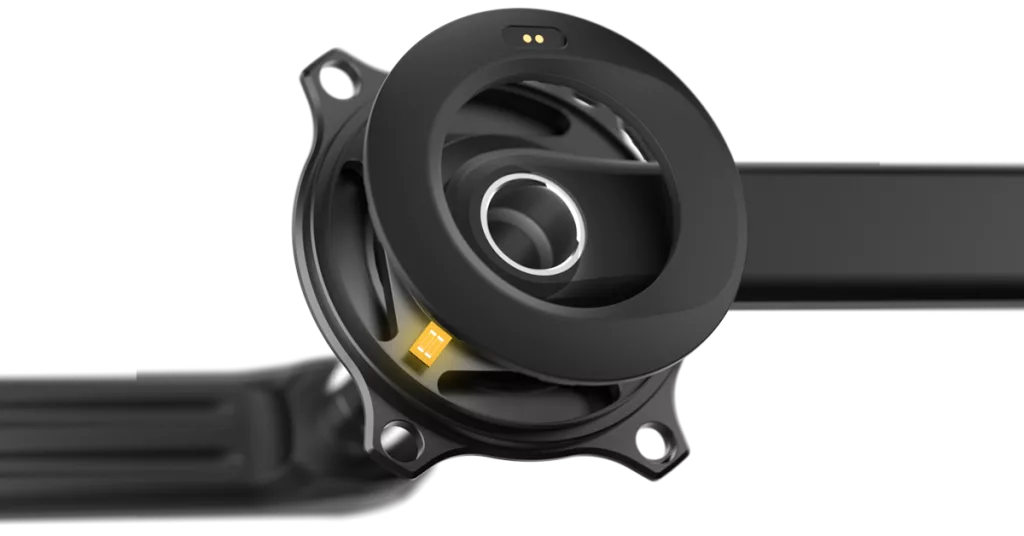
A spider power meter is built into or mounted around the crank spider, the structure that connects the crank arms to the chainrings. This location matters because the spider sits close to the point where force from both legs passes into the drivetrain.
For many performance bike platforms, that is the main appeal. A spider-based power meter can be planned as part of the drivetrain rather than treated as an add-on. When the crankset, chainrings, frame, and product tier are considered together, the result can be cleaner for both the rider and the factory.
This is why spider-based systems often appear in higher-end crankset designs and complete performance builds. In Magene Enterprise messaging, spider-based power meter solutions are part of our B2B power meter solution category for bicycle brands and manufacturers. The P515 power meter has received excellent feedback.
What Is A Crank Power Meter?
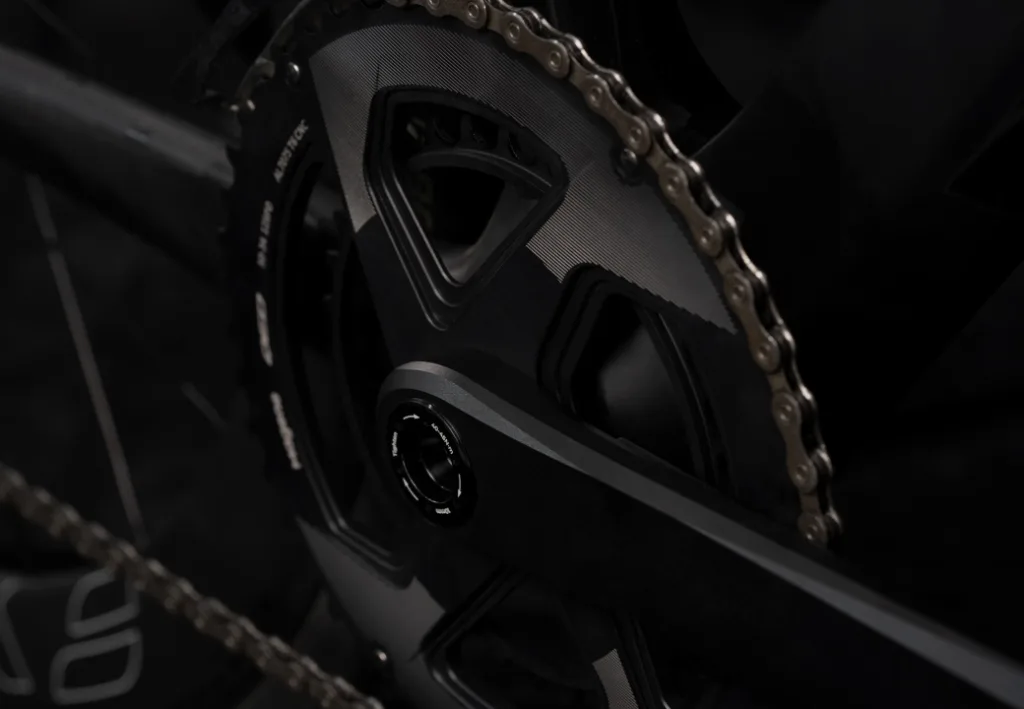
“Crank power meter” is a broader term than many people realize. In consumer search results, it often means a crank arm power meter, usually installed on the left crank arm. In other cases, it may refer to a complete crankset power meter or a crank-based system that measures power through the crank structure.
Crank arm power meters are popular because they can be simple to understand, relatively easy to install, and often more affordable than more integrated systems. Many single-sided crank arm meters measure power from one leg, usually the left, then double that number to estimate total output.
That approach can work well for many riders. It also has limits. If a rider has a meaningful left-right imbalance, a single-sided estimate may not reflect total power as accurately as a system that measures closer to combined output. Crank arm compatibility can also depend on crank model, crank length, frame clearance, and drivetrain standard.
For a bicycle brand planning a complete bike, these details are not small. A product manager needs to know whether the system fits the platform, the supply chain, the assembly process, and the after-sales model.
| Evaluation Point | Spider Power Meter | Crank / Crank Arm Power Meter |
|---|---|---|
| Measurement position | Crank spider, between crank and chainrings | Crank arm or crankset structure |
| Power reading | Usually total power from both legs through the drivetrain | Often single-sided if crank arm based; some cranksets provide broader measurement |
| Brand integration | Strong fit for complete-bike and factory integration | Often easier for aftermarket or lower-cost retrofit scenarios |
| Compatibility | Depends on crankset, chainring, BCD/interface, axle, and drivetrain standard | Depends on crank model, length, clearance, and frame compatibility |
| Service model | Best planned as part of the bike platform | Often simpler for individual replacement but can fragment specs |
| Product positioning | Strong for premium and mid-range Power Meter Ready builds | Strong for entry-level power adoption and aftermarket upgrades |
| B2B value | Helps brands build consistent power meter configurations across models | Useful where cost, simplicity, and crank compatibility are priorities |
Accuracy, Consistency, And Measurement Location
Power meter accuracy is often reduced to a percentage, such as ± 1% or ± 1.5%. That number is useful, but it is only part of the story.
Riders care about whether the numbers feel believable from ride to ride. Brands need to think one step further: will the data remain stable across production batches, riding conditions, calibration routines, and service scenarios?
Spider power meters are attractive because they measure at a location where force from both legs passes through the crank system. Crank arm meters, especially single-sided designs, may estimate total output by doubling one side. That can be cost-effective, but it depends on an assumption about rider balance.
For bicycle brands, the practical question is simple:
Can this system deliver data riders trust while staying repeatable in production and supportable after the bike is sold?
Compatibility And Platform Planning
Compatibility is where the B2B decision becomes more interesting.
A spider power meter has to match the crankset architecture, chainring interface, bottom bracket standard, drivetrain layout, and frame design. That sounds demanding, but it can be an advantage when the system is planned early. The brand can build a cleaner product specification around the full bike platform.
A crank arm power meter may be easier to understand as a retrofit product. It can also introduce more variation across crank lengths, frame clearances, and drivetrain options. For one rider, that may be manageable. For a brand building several models, variation can turn into extra procurement, assembly, and service work.
That is why Power Meter Ready planning matters. When a bike platform is designed with power measurement in mind, the team can make better decisions about crankset selection, chainring compatibility, installation, firmware support, packaging, and service documentation.
Assembly And Factory Integration
For OBM and ODM projects, the factory question is just as important as the rider question. A power meter that looks strong on a spec sheet still has to work on the line.
A good power meter solution should be easy to install consistently. It should be testable during production. The process for calibration, charging or battery checks, wireless pairing, packaging, and final inspection should be clear enough that it can be repeated without guesswork.
Spider-based systems can work well here because they can be treated as part of the drivetrain module, not as a late-stage accessory. When integrated correctly, they support a more repeatable factory process and a more coherent product story.
Magene Enterprise supports partners with solution planning, sample support, testing, debugging, compatibility verification, production coordination, and factory integration support. The goal is not to make one sample bike read power correctly. The goal is to help brands build a configuration that can be repeated at scale.
Which Option Fits Different Bike Platforms?
Premium Road And Performance Bikes
Spider power meters are a strong fit when the bike needs a clean, integrated drivetrain story. They suit high-end positioning, total-power measurement, and complete performance specifications.
Mid-Range Power Meter Ready Bikes
Spider-based solutions can also help brands bring power measurement into more accessible model ranges. A brand can prepare the bike platform for power integration even if every model does not ship with the same specification.
Entry-Level Or Aftermarket Upgrade Scenarios
Crank arm power meters can be attractive when affordability and simple retrofitting matter. They may be suitable for individual riders or entry-level configurations where single-sided measurement is acceptable.
Multi-Bike Rider Use
Pedal power meters often appear in consumer guides because riders can move them between bikes more easily. That is useful for individual buyers. For complete-bike brands, however, portability is usually less important than drivetrain integration, repeatable assembly, and service planning.
Magene Enterprise Power Meter Solutions
Magene Enterprise is the B2B division of Magene Technology. We support bicycle brands, eBike manufacturers, component partners, and OEM/ODM teams with smart cycling technologies for production-ready bike platforms.
Our power meter solutions help bicycle brands integrate professional-grade power measurement into complete bike platforms, from premium builds to mid-range Power Meter Ready models.
Our spider-based power meter solutions support:
- Factory integration for bicycle brands and manufacturers.
- Brand customization potential.
- Scalable planning across premium and mid-range models.
- Power Meter Ready bike configurations.
- Professional-grade performance positioning.
- Technical support from concept planning to testing and production readiness.
Technical details that may be used in Magene Enterprise power meter messaging include ± 1% accuracy, 0-2500W power range, IPX7 waterproofing, magnetic charging, up to 330 hours of battery life, Bluetooth and ANT+ support, power data, cadence data, left-right balance, pedaling smoothness, and calibration support.
These details matter because a power meter is not just a sensor. It is part of how a brand defines a complete bike.
Checklist For Bicycle Brands
Before choosing between a spider power meter and a crank power meter, product teams should work through these questions:
- Is the power meter intended for a premium model, mid-range model, or Power Meter Ready platform?
- Does the drivetrain architecture support a spider-based system cleanly?
- Which crankset, chainring, axle, and bottom bracket standards are required?
- Is total-power measurement important for the product promise?
- Will the system be installed at the factory or left as an aftermarket upgrade?
- How will calibration, charging, pairing, and quality inspection be handled?
- What documentation will dealers and riders receive?
- How will replacement parts and warranty service be managed?
- Can the solution scale across multiple bike models?
- Does the supplier support testing, debugging, compatibility verification, and production coordination?
Answering these questions early makes the power meter easier to integrate, easier to explain, and easier to support after launch.
Conclusion
Spider power meters and crank power meters both help riders train with power data. The difference is where they measure, how they integrate, and how well they support the bike platform.
For individual riders, a crank arm or pedal system may be attractive because it is easy to understand and often easier to install. For bicycle brands, spider-based power meter solutions can offer a stronger path for complete-bike integration, consistent product positioning, and Power Meter Ready planning.
To discuss spider-based power meter solutions for your next bike platform, contact Magene Enterprise for information or talk to our engineering team about your project requirements.
FAQ
For more questions, please visit our FAQ page.
Is a spider power meter more accurate than a crank arm power meter?
Not in every situation. Spider power meters often provide a stronger architecture for total-power measurement because they measure closer to where both legs contribute to the drivetrain. Crank arm meters can be consistent and useful, but single-sided models depend on assumptions about left-right balance.
When does a crank arm power meter make sense?
A crank arm power meter can make sense when affordability, simple installation, and aftermarket upgrade potential are priorities. It may be less ideal when a brand needs a standardized complete-bike platform across many models.
Does Magene Enterprise support power meter OBM and ODM projects?
Yes. Magene Enterprise supports bicycle brands and manufacturing partners with power meter solution planning, sample support, testing, debugging, compatibility verification, production coordination, and factory integration support.