



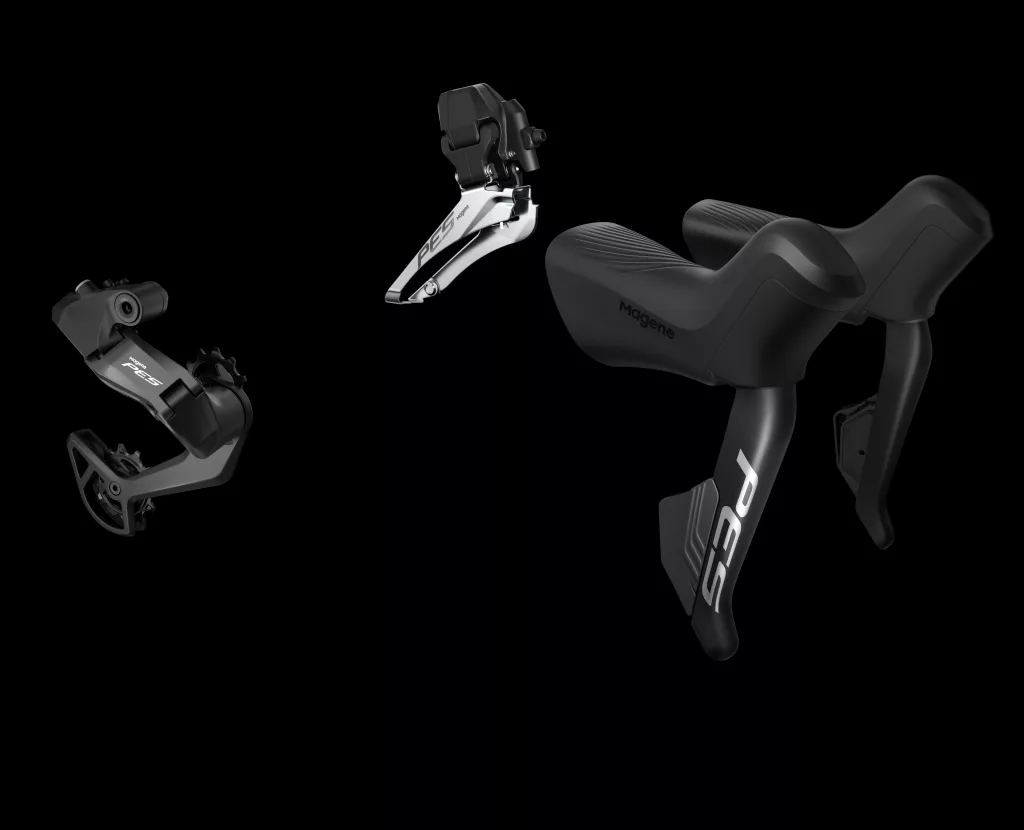
Electronic shifting used to sit at the top of the range. It was the feature you added to a flagship road bike when the rest of the spec was already expensive. That has changed. More brands now treat an electronic shifting system as part of the bike platform, not just a nicer derailleur.
Riders see the obvious parts first: cleaner controls, quick shifts, and fewer exposed cables. Product teams have a different set of questions. Will the system fit the frame? Will it make assembly easier or harder? What happens when a battery is low, a derailleur takes a hit, or a dealer needs to diagnose a problem?
Those questions matter. For bike brands, electronic shifting is a drivetrain decision, a production decision, and a service decision at the same time.
At Magene Enterprise, we work with bicycle brands and manufacturing partners on electronic shifting system solutions for modern bike platforms, including semi-wireless shifting systems, sample evaluation, testing, debugging, and production coordination.
What Is an Electronic Shifting System?
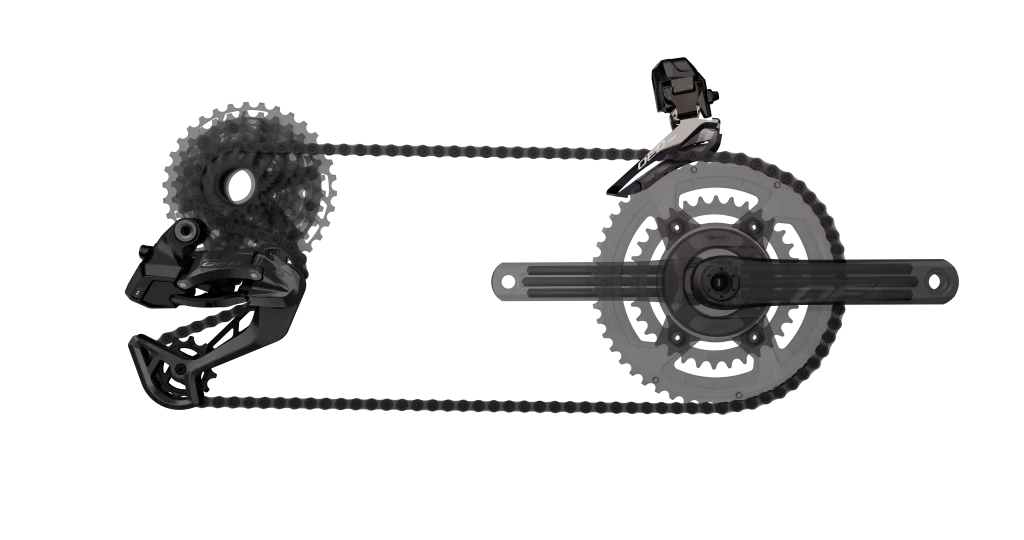
An electronic shifting system changes gears through electronic signals instead of a mechanical cable pull. With a mechanical drivetrain, the shifter moves a cable, and the cable moves the derailleur. With an electronic gear shifting system, the rider presses a control, the signal reaches the derailleur, and a small motor moves the chain.
Most systems include electronic shifters, a rear derailleur, batteries, communication hardware, firmware, and some form of setup or diagnostic support. Some are wired. Some are wireless. Some mix both approaches.
The main change is simple: the shift no longer depends on cable tension. That can make shifting more repeatable, especially after the bike has been ridden, shipped, stored, or serviced.
Why Brands are Paying Attention
Electronic shifting is attractive because it touches several parts of the bike beyond the drivetrain.
It can reduce visible shift cable routing. That helps with integrated cockpits, aero road frames, and fully internal cable routing designs. It can also reduce some of the adjustment work normally tied to mechanical cable systems.
For production teams, fewer cable-related variables can make final setup more consistent. For product managers, electronic shifting gives a bike a clearer position in the range. A mid-range performance bike with a wireless electronic shifting system tells a different story from the same frame with a conventional mechanical drivetrain.
There is a tradeoff, of course. Electronic shifting removes some mechanical problems and adds electronic ones: batteries, firmware, pairing, diagnostics, and component replacement. A brand should not treat it as a simple upgrade box to tick. It needs a proper integration plan.
Electronic Shifting Vs Mechanical Shifting
Mechanical shifting is not going away. It is familiar, serviceable, and cost-effective. Many bikes still make more sense with a mechanical drivetrain.
Electronic shifting becomes more interesting when a brand wants cleaner routing, more consistent shift feel, or a stronger spec story. It also makes sense when production teams want to reduce cable setup work on bikes designed for factory integration.
| Evaluation point | Mechanical shifting | Electronic shifting |
|---|---|---|
| Shift control | Cable pull | Electronic signal and motorized derailleur movement |
| Setup focus | Cable routing and tension | Pairing, calibration, battery, and firmware behavior |
| Frame design | Needs mechanical cable paths | Can support cleaner cockpit and routing layouts |
| Service concern | Cable wear and adjustment | Charging, diagnostics, and electronic component support |
| Best fit | Cost-sensitive and service-focused bikes | Modern road, gravel, performance, and selected eBike platforms |
What to Check Before Choosing a System
The spec sheet is only the start. Before choosing an electronic bike shifting system, product teams should check how the system behaves across the whole product lifecycle.
Start with the platform. Road, gravel, all-road, and eBike projects all create different drivetrain requirements. Speed range, cassette choice, chainring setup, rear derailleur capacity, cockpit design, and frame routing all need to line up.
Then look at production. How are the shifters and derailleurs paired? How is calibration handled at the factory? Can production-line staff repeat the setup without guesswork? What does final inspection look like?
Battery and service planning deserve the same attention. Riders need to know how to charge the system and read battery status. Dealers need a clear path for troubleshooting. Brands need a plan for replacement parts, warranty handling, and documentation.
Testing should include ordinary riding and awkward cases: low battery, vibration, wet conditions, shipping, impact, incorrect setup, replacement components, and after-sales service requests. A system that works on a prototype bike still needs to prove it can survive production.
Where Electronic Shifting Fits
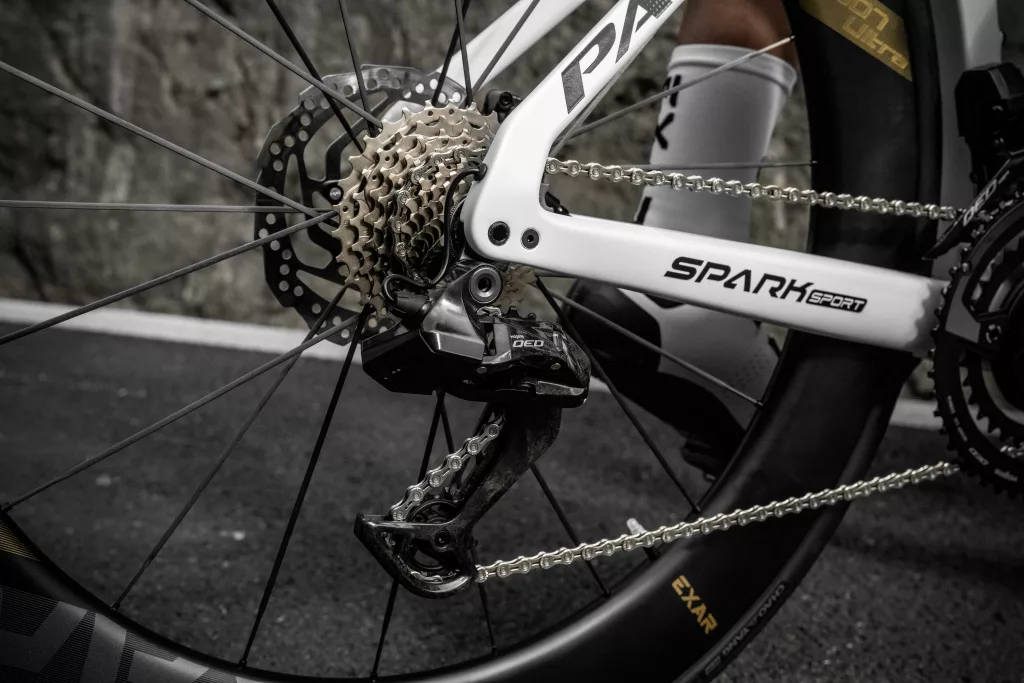
Road bikes remain the most obvious fit. Electronic shifting works well with integrated cockpits, aero frames, and performance positioning. It also gives brands a clean way to separate model tiers.
Gravel and all-road bikes need a little more caution. Chain control, cassette range, battery security, impact protection, and service access become more important when the bike will see rougher conditions.
For eBike platforms, Magene Enterprise offers two solutions: direct-drive electronic derailleur solutions and Cable-actuator electronic shifting solutions. Direct-drive solutions fit platforms built around electronic actuation. Cable-actuator solutions add electronic control while keeping a cable-actuated drivetrain layout.
Magene Enterprise Electronic Shifting Solutions
Magene Enterprise is the B2B division of Magene Technology. We support bicycle brands, manufacturers, component partners, and OEM/ODM teams that need smart cycling technologies ready for real bike platforms.
Our electronic shifting solutions are designed to help brands improve drivetrain efficiency, simplify assembly, and support cleaner frame design through semi-wireless electronic shifting systems.
The QED Series is positioned for professional and elite racing segments. It supports 10-12 speed systems and suits road or gravel platforms where wireless shifting, fully internal cable routing, and high-end drivetrain positioning matter. QED electronic shifting system supports 2.4G, BLE, and ANT+ communication, synchronized shift, multi-scenario setup, and crash protection mode.
The PES Series is built for broader market use. It gives brands a way to bring wireless electronic shifting into more accessible model ranges without making every bike a flagship build.
Used together, QED and PES can help a brand plan a cleaner product ladder: high-end performance models at the top, stronger mid-range models below them.
How We Support Integration
For a bicycle brand, electronic shifting integration is rarely a one-step purchase. The system has to fit the frame, pass testing, work in production, and make sense for dealers and riders after launch.
Magene Enterprise can support partners with:
-
OBM, and pre-installation services
-
Solution planning and product architecture support
-
Sample evaluation, testing, and debugging
-
Compatibility verification
-
Production coordination and factory integration support
-
Brand customization, compliance support, and launch readiness support
The goal is not to make a demo bike shift well once. The goal is to help partners bring electronic shifting into a bike platform that can be built, sold, serviced, and repeated.
Conclusion
Electronic shifting is no longer just a premium detail for top-end racing bikes. For the right platform, it can help a brand clean up the frame design, reduce cable-related setup work, and create a stronger product tier.
The decision still needs discipline. The system has to fit the bike, the factory, the dealer network, and the rider. When those pieces are planned together, electronic shifting becomes much easier to launch.
To discuss electronic shifting for your next bike platform, contact Magene Enterprise for OBM information or talk to our engineering team about your project requirements.
FAQ
What is an Electronic Shifting System on a Bike?
An electronic shifting system uses electronic controls and a motorized derailleur to change gears. It replaces the traditional cable-pull action with a signal-based shifting process.
Is Electronic Shifting Better Than Mechanical Shifting?
Not always. Electronic shifting is useful for cleaner routing, consistent shift feel, and modern product positioning. Mechanical shifting still works well for cost-sensitive bikes and markets where easy service is the priority.
What is an Electronic Groupset?
An electronic groupset is a drivetrain system built around electronic shift controls and motorized derailleurs. Depending on the system, it may also include batteries, chargers, brake components, a cassette, chain, and crankset.
Why Do Bicycle Brands Use Wireless Electronic Shifting?
Bicycle brands use wireless electronic shifting to reduce visible cable routing, simplify some assembly steps, and give performance models a cleaner drivetrain story.